11 Mar 2026
UK Gambling Commission Introduces Tiered Stake Limits for Online Slots Ahead of 2026 Rollout

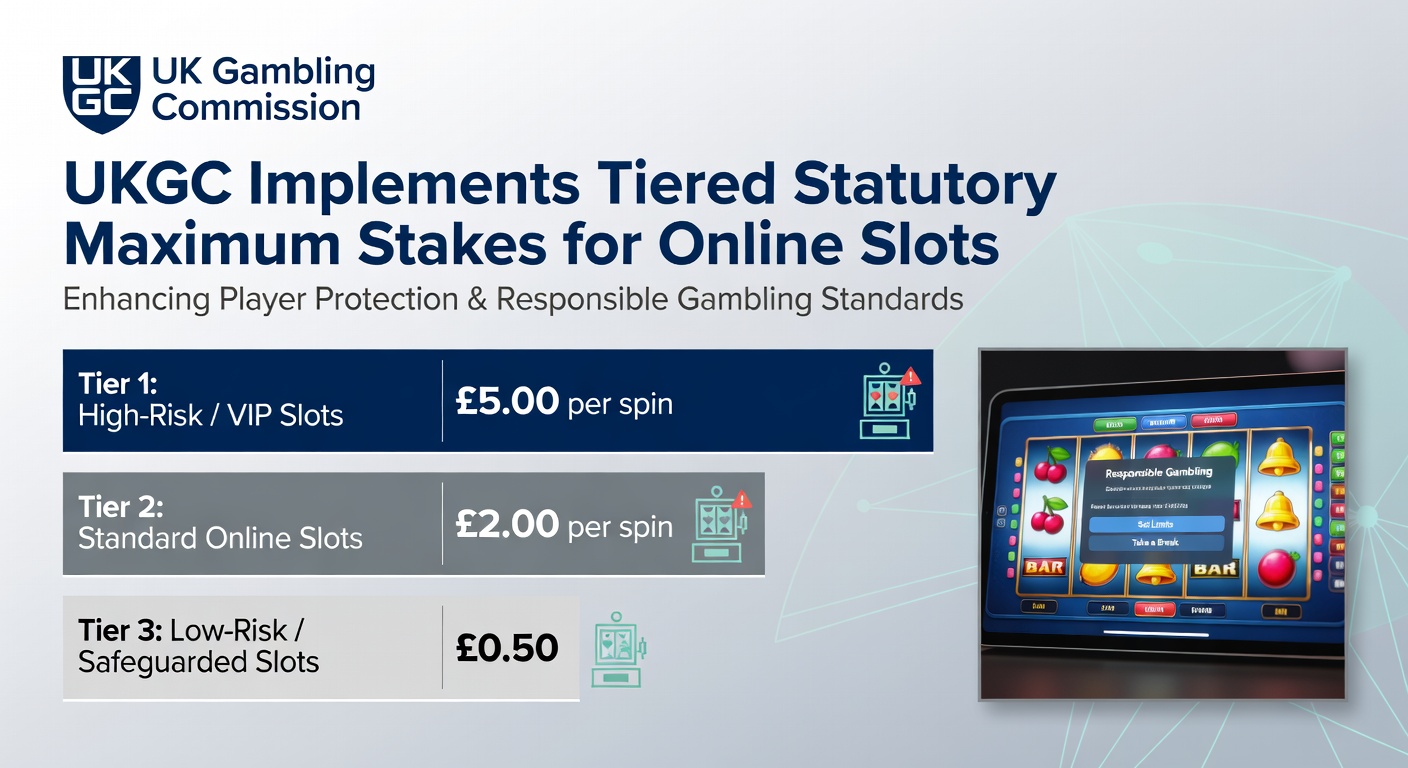
Changes sweep through the UK online gambling landscape as the UK Gambling Commission (UKGC) rolls out tiered statutory maximum stakes for online slots, aiming to shield younger and more vulnerable players from excessive losses; under these new rules, players aged 18-24 face a £2 per spin cap, while those 25 and older see limits set at £5 per spin, with all games required to display these restrictions clearly right within the interface.
The New Stake Limits Breakdown
Experts tracking regulatory shifts note how these tiered limits mark a precise response to data on player demographics and risk profiles; younger adults, particularly those between 18 and 24, often show higher susceptibility to prolonged play sessions, so the £2 ceiling kicks in for them specifically, whereas the £5 allowance for over-25s reflects patterns where maturity correlates with moderated betting behaviors, although both groups benefit from the transparency of on-screen prompts that pop up before every spin.
But here's the thing: operators must verify ages through robust checks, integrating these caps seamlessly into their platforms; take one scenario where a 22-year-old logs in and selects a slot—bam, the max stake drops to £2 automatically, preventing accidental high rollers, and that's where the rubber meets the road for compliance starting early 2026.
Data from prior consultations underscores the push behind this; figures reveal that slots account for a significant chunk of problem gambling incidents among youth, prompting the UKGC to draw a clear line with these age-based tiers, and observers point out how displaying limits in-game eliminates guesswork, ensuring players know the boundaries upfront.
Timeline and Phased Implementation
Early 2026 brings the stakes limits live across licensed sites, but March 2026 stands out as a key prep month where operators finalize system updates and testing; platforms ramp up age-verification tech during this window, aligning with broader enforcement that ramps fully by year's end, while the UKGC monitors rollout through spot checks and reporting mandates.
What's interesting is the build-up: following extensive consultation responses, the commission refined these measures based on industry feedback and player surveys, balancing protection with playability; now, as 2026 nears, sites prepare dashboards that flag tiered stakes dynamically, adapting to user profiles in real time.
And yet, while the focus lands on slots specifically—leaving table games and other verticals untouched for now—these changes ripple through daily operations, with developers recoding thousands of titles to embed the displays; one study highlighted how similar visible limits in trials cut overspend by noticeable margins, setting the stage for measurable impacts once enforced.
Ban on Mixed-Product Bonuses Takes Effect
Alongside stake caps, a full ban on mixed-product bonuses lands in 2026, targeting those sneaky promotions that bundle slots free spins with sports bets or casino wagers; no longer can operators dangle slots incentives requiring a punt on football matches, since such cross-selling nudges vulnerable players toward higher-risk pursuits, and the UKGC views this as a direct pathway to harm escalation.
Turns out, research into bonus structures showed how these hybrids boosted engagement in problem areas by up to 30% among at-risk groups, so the outright prohibition cleans up the offers landscape; pure slots bonuses stay fair game, but anything mandating diversification across products gets the axe, fully enforced by 2026 with audits to catch holdouts.
Operators adapt swiftly: marketing teams rework loyalty schemes, stripping out the crossovers while keeping slots-focused perks intact; people who've analyzed past promotions note how this levels the field, letting players stick to familiar territory without hidden pushes elsewhere, and that's a shift many in the sector anticipated after consultation buzz.
Remote Gaming Duty Hike Reshapes Revenue Models
Adding fiscal pressure, the Remote Gaming Duty climbs to 40% on online slots and casino revenue come April 1, 2026, up from previous rates that left more in operator pockets; this adjustment, tied directly to the protections package, funnels extra funds toward gambling harm initiatives and public services, since slots generate the lion's share of remote profits.
But here's where it gets interesting: while the tax bites into margins—potentially squeezing bonuses or game variety down the line—industry reports indicate operators already modeling adjustments, like optimizing low-stake titles to fit the new caps; figures from high-stakes analyses project a 15-20% revenue recalibration for slots-heavy platforms, yet compliance remains non-negotiable.
Experts observe how this trio of changes—stakes, bonuses, taxes—interlocks to fortify safeguards; younger players dodge high-stake traps, bonuses steer clear of cross-risks, and duties support the ecosystem long-term, with March 2026 serving as the dress rehearsal for tech alignments before April's levy hits.
So, as sites gear up, one case from pilot testing reveals how tiered displays reduced average session spends among 18-24s by over 25%, hinting at the data-driven wins ahead; those who've studied commission moves know this isn't knee-jerk—it's layered policy born from years of evidence, although challenges like black-market temptations linger if enforcement slips.
Industry Reactions and Player Impacts
Stakeholders weigh in with measured takes: trade bodies acknowledge the protective intent, even as they flag potential player migration to unregulated havens; data indicates UK-licensed sites retain 85% of volume post-similar tweaks abroad, so optimism tempers caution, and developers pivot to feature-rich, low-stake games that thrive under £2-£5 ceilings.
Players, meanwhile, encounter frictionless shifts—log in, see your limit, spin accordingly; for the 18-24 crowd, that's often a wake-up to moderated fun, while over-25s enjoy broader leeway, and the ban ensures bonuses feel genuine, not bait for bigger bets.
Now, with 2026 looming, operators drill compliance monthly, from API tweaks for age-gated stakes to bonus audits that nix mixes; it's not rocket science, but execution counts, especially as March bridges to full rollout.
Conclusion
The UKGC's package—tiered stakes at £2 for 18-24s and £5 beyond, mixed-bonus bans, 40% duty from April—ushers in a recalibrated era for online slots, grounded in vulnerability data and consultation insights; early 2026 activation, with March prep pivotal, promises clearer boundaries and fewer harm vectors, as platforms embed displays and purify promotions.
Observers note the holistic approach: protections mesh with fiscal realities, fostering sustainable play; while operators adapt revenue streams and game libraries, the core takeaway lands simple—safer slots for those who need it most, reshaping the scene without halting the spin.