Navigating Progressive Reward Pathways in Regulated Reel Platforms from Free Spins to Sustained Wagering Goals
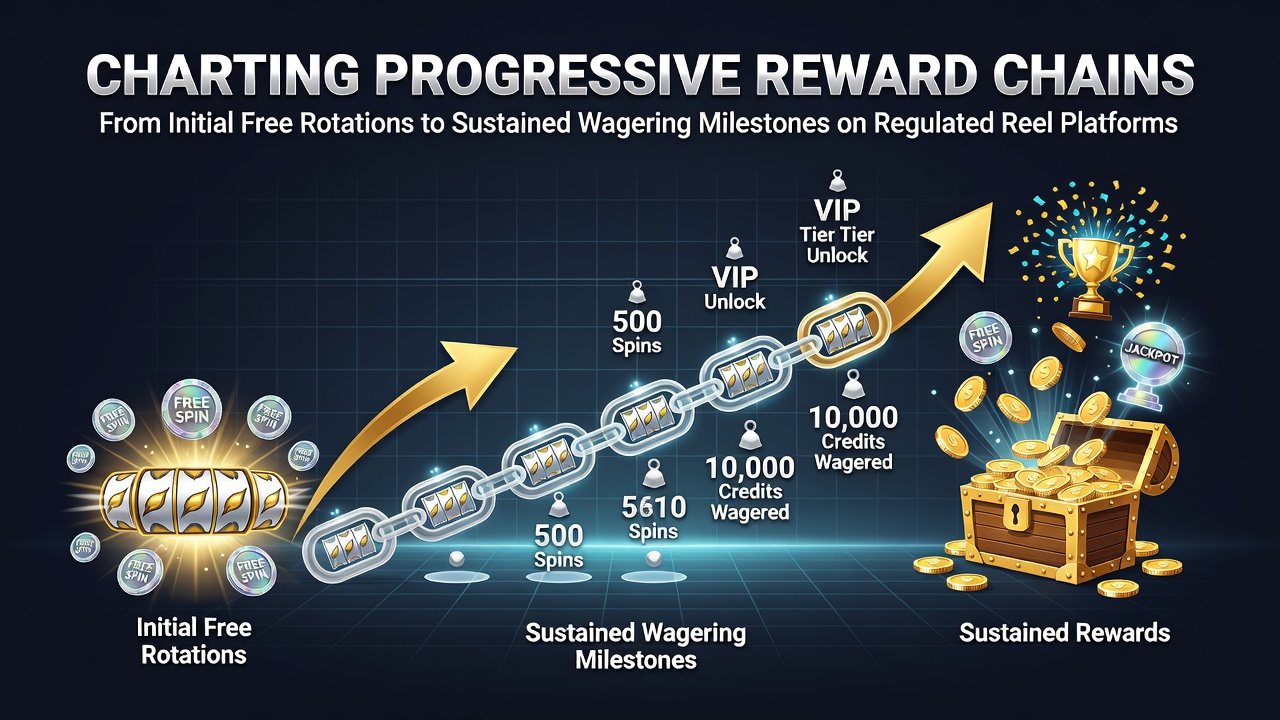
Regulated reel platforms structure incentives as sequences that begin with complimentary spins and advance through deposit matches toward loyalty milestones, creating pathways that operators track through player accounts and compliance systems. These chains operate under licensing frameworks that require clear disclosure of terms, including playthrough multipliers and expiration periods, which data from industry reports show influence session lengths and retention metrics across multiple jurisdictions.
Initial free rotations typically arrive via no-deposit offers that platforms extend to verified users after basic registration and identity checks. These spins carry fixed values per rotation along with caps on maximum winnings that can convert to withdrawable funds, after which any remaining balance transitions into a standard account subject to full wagering rules. Observers note that such entry points serve as acquisition tools, with subsequent requirements designed to guide players toward deposit-funded play without violating regional advertising standards.
Transition Mechanisms from Complimentary Spins to Matched Deposits
Once players complete the terms attached to initial free rotations, platforms often present matched deposit offers that scale according to the amount funded and the player's accumulated activity level. The progression links the outcome of the no-deposit phase directly to eligibility for these matches, as many systems record prior spin results and adjust available promotions accordingly. Research indicates that operators in North American markets use tiered matching percentages, starting at lower rates for first deposits and increasing for repeat actions that meet minimum thresholds within defined time windows.
Playthrough conditions attach to both the original free spin winnings and the matched funds, requiring a set number of total bets before any balance becomes eligible for withdrawal. These conditions accumulate across the chain, so early winnings contribute to later milestones rather than resetting at each stage. Figures from gaming associations reveal that average multipliers range between twenty and forty times the combined bonus value, with variations tied to game types selected during the wagering period.
Milestone Structures and Loyalty Integration
Sustained wagering milestones emerge once players reach volume-based targets tracked through cumulative bets or net losses over rolling periods. Platforms convert these achievements into loyalty points or tier upgrades that unlock higher-value free spin packages, cashback percentages, or exclusive game access. Data shows that such systems encourage continued engagement by linking short-term bonus completion to longer-term status benefits that reset or advance on monthly cycles.
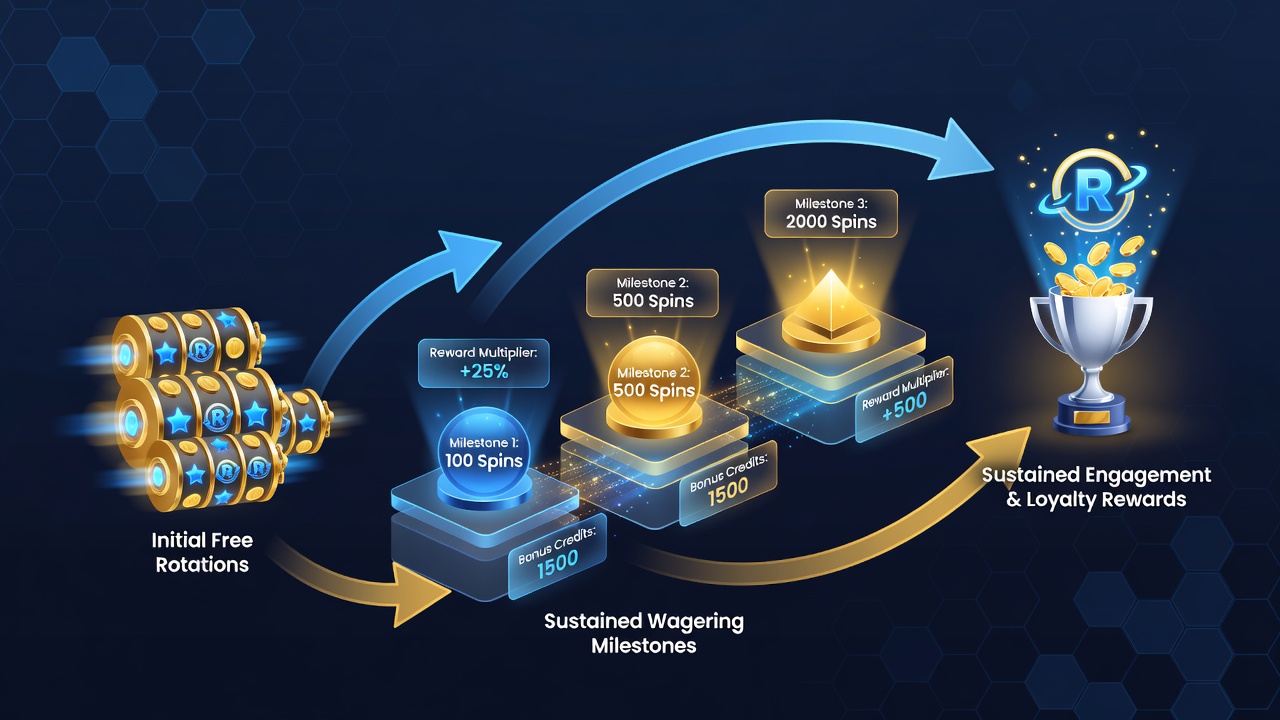
Regulators in various regions require operators to maintain audit trails for these chains, ensuring that transitions between stages comply with responsible gaming limits and anti-money laundering protocols. In June 2026, several Canadian provincial authorities updated their reporting templates to capture how frequently players move from entry-level offers to sustained wagering levels, providing aggregated statistics that researchers can analyze for behavioral patterns. Similar frameworks exist in Australian states where gaming authorities mandate transparency around bonus expiration and forfeiture rules.
Examples from licensed operators demonstrate the practical flow: a player who uses ten free spins might generate a small win that then qualifies for a fifty-percent match on the first deposit, after which repeated wagering at set levels triggers monthly cashback calculated on net losses. These sequences rely on automated tracking software that logs every bet against active bonuses, preventing overlap or double-counting that could breach terms.
Regional Variations in Chain Design
European markets outside the United Kingdom apply distinct caps on bonus values and require explicit player consent before advancing from one reward stage to the next, which affects how quickly chains progress. North American platforms, by contrast, emphasize integration with sports betting accounts where slot activity contributes to overall loyalty across verticals. Academic studies from institutions examining gambling behavior have documented that these design differences correlate with variations in average session duration reported in operator filings.
What's significant is that compliance documentation from sources such as the American Gaming Association outlines best practices for disclosing how free spin outcomes feed into subsequent matched offers and milestone rewards. Parallel guidance appears in reports issued by Australian research bodies that track cross-platform player movement between regulated sites.
Technical Implementation and Player Tracking
Backend systems on regulated platforms assign unique identifiers to each bonus stage, allowing real-time updates visible in player dashboards. These identifiers carry forward accumulated wagering credit, so completion of an early free spin requirement directly reduces the remaining playthrough attached to a later match. Operators test these linkages during licensing audits to confirm that no stage bypasses verification checks or responsible gaming interventions.
Additional layers appear when platforms introduce time-limited challenges that sit alongside the core chain, such as daily login spins that contribute partial credit toward a weekly milestone. Data indicates that players who engage with these supplementary elements reach sustained wagering targets at higher rates than those following only the primary sequence, although overall spend patterns remain subject to individual limits set by the account holder.
Conclusion
Progressive reward chains on regulated reel platforms function as connected sequences that start with verified free rotations and advance through deposit-linked matches to loyalty-based milestones, all governed by licensing conditions that mandate transparency and auditability. Regional authorities continue to refine reporting requirements, with updates such as those implemented in Canada during June 2026 providing clearer data on progression rates across licensed operators. Industry organizations and research entities supply the frameworks that allow consistent measurement of how these structures operate within legal boundaries.